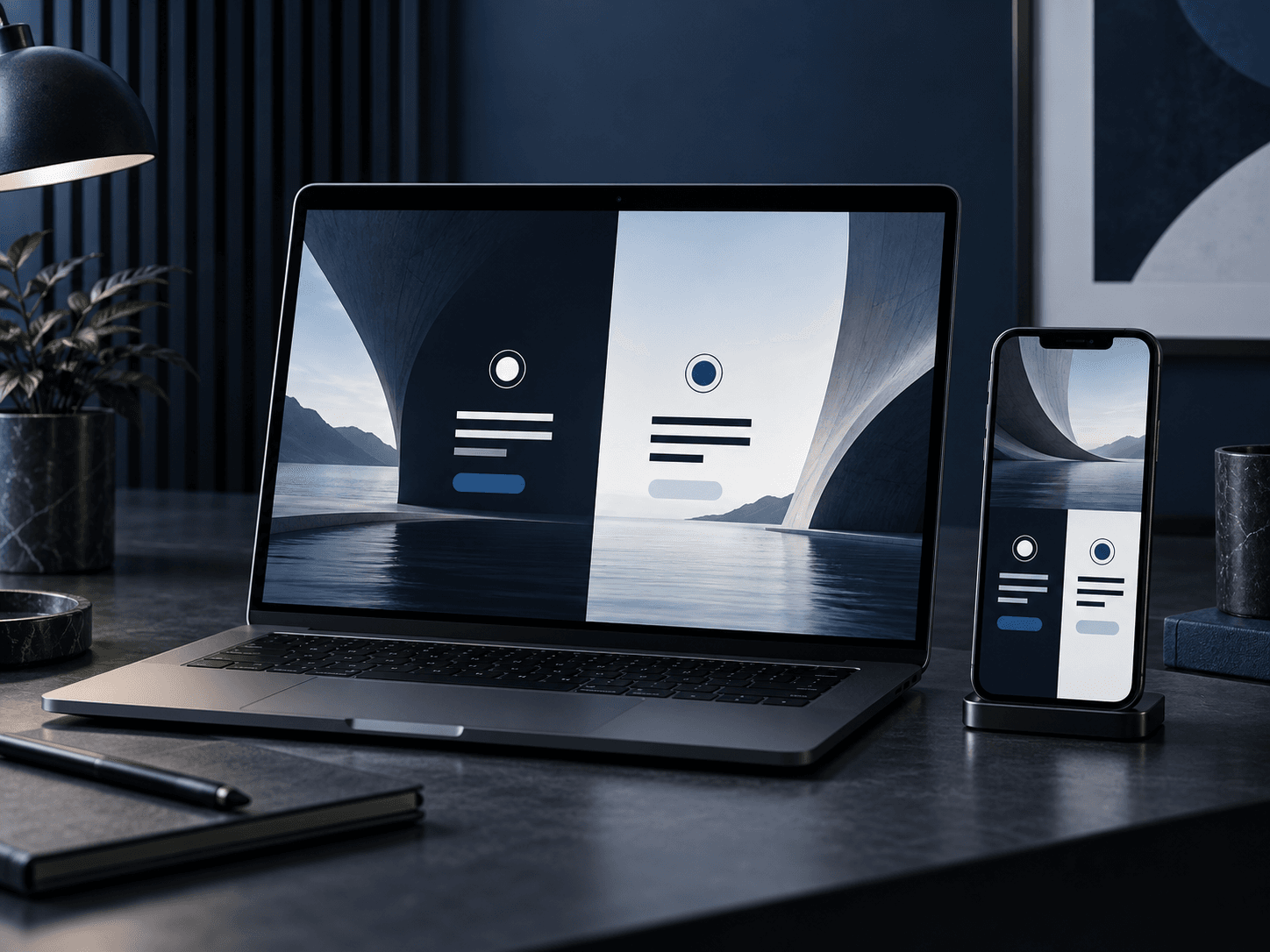
Bilingual websites
Help customers find information and contact you in English or Spanish. We build both language versions together, including navigation, forms, and search setup.
“Bilingual” covers three very different things.
Choose the level of language support your customers need. We define what is included so you can compare the options before committing.
A translation widget
Basic accessA quick way to offer a translated view of a page. It gives you less control over wording and the full customer experience than dedicated language versions.
Dedicated language pages
Website contentEnglish and Spanish pages with reviewed wording, a clear language switch, and search setup for each version.
The full inquiry process
From visit to replyNavigation, forms, confirmation messages, and follow-up templates planned together. We confirm how your team will respond to inquiries in each language.
Both languages, built as one site.
The goal is that a visitor never notices any of this. They just find you, read you, and reach you, in whichever language they were already thinking in.
Copy suited to your customers
Service descriptions and calls to action written for the people you serve, with a language review before launch.
Search setup for both versions
Dedicated page addresses and language signals help search engines understand which version to show.
Relevant search terms
We review how customers describe your services in each language and use that to plan page topics and wording.
Forms in the visitor’s language
Labels, validation messages, and confirmations match the language of the page so visitors know what to do next.
Updates managed together
Both versions share one site structure, with a clear process for updating service details, prices, and contact information.
A scope that fits your business
Start with the pages your customers need most. We explain what to prioritize and price that work before adding more.
Help customers find you in either language.
We review which services people search for in English and Spanish, then prioritize the pages most relevant to your customers. The scope depends on your business, your audience, and the information they need before contacting you.
This pairs directly with local search work to connect the information on your website with the way customers look for your services.
The things people usually ask.
And if yours isn’t here, just ask, a real person will answer.
Yes. We plan English and Spanish pages together, including navigation, forms, and search setup. We agree on the pages and language review process before work begins.
Which language are your customers searching in?
If the answer is both, or you are not sure, tell us who you serve and we'll look at what the search demand actually looks like in each language before quoting you anything.
Prefer to talk it through? Call (956) 477-1721 or email cesar@acacialakeweb.com. Either way, you’ll hear back within one business day.